Advertisement
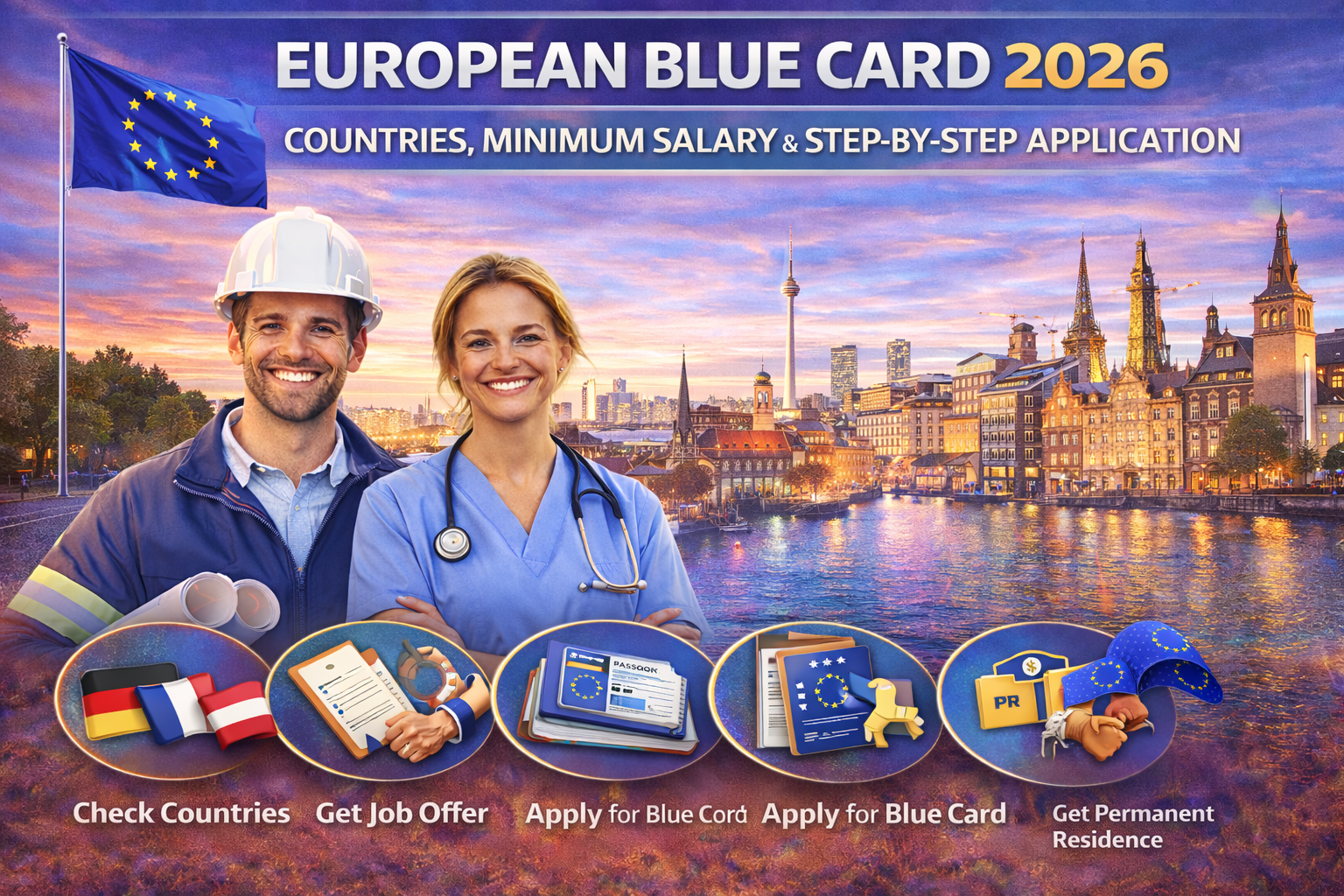
European Blue Card 2026: Countries, Minimum Salary & Step-by-Step Application Guide
The European Blue Card is one of the best options for skilled professionals who want to live and work in Europe legally. Introduced to attract qualified foreign workers, this program allows non-EU citizens to work in high-demand sectors and eventually apply for permanent residence. In 2026, many European countries continue to offer the Blue Card with simplified rules, faster processing, and better salary benefits.
Advertisement
This guide explains which countries offer the Blue Card, minimum salary requirements, and how to apply step by step.
Advertisement
What is the European Blue Card?
The European Blue Card is a work and residence permit designed for highly qualified professionals from outside the European Union. It allows foreign workers to live and work legally in participating European countries and enjoy many of the same rights as local workers.
Key advantages include:
-
Legal work authorization
-
Competitive salary and benefits
-
Opportunity to bring family members
-
Pathway to permanent residency
-
Freedom to move within certain EU countries after a period
The Blue Card is especially popular among professionals in IT, engineering, healthcare, and technical fields.
Countries Offering the European Blue Card in 2026
Many EU countries participate in the Blue Card program. Some of the most popular destinations include:
Germany
Germany is the leading Blue Card country due to its strong economy and high demand for skilled professionals. IT specialists, engineers, and healthcare workers are especially needed.
France
France offers Blue Cards to qualified professionals in technology, finance, and engineering sectors.
Netherlands
The Netherlands provides excellent working conditions and attracts foreign professionals in IT, logistics, and business services.
Sweden
Sweden offers opportunities in engineering, IT, and manufacturing industries.
Austria
Austria uses the Blue Card to attract skilled workers in construction, healthcare, and technical roles.
Other countries such as Belgium, Italy, Spain, and Finland also participate in the program.
Minimum Salary Requirements (2026)
Each country sets its own minimum salary threshold. The salary must meet the required level to ensure the position is skilled and professional.
Approximate minimum salary requirements in 2026:
-
Germany: €45,300 per year (lower threshold for shortage occupations)
-
France: €53,800 per year
-
Netherlands: €5,800 per month (approx.)
-
Sweden: €54,000 per year
-
Austria: €47,000 per year
Shortage occupations such as IT, engineering, and healthcare may have slightly lower salary requirements.
Higher salaries increase approval chances and provide better long-term opportunities.
Step 1: Check Your Eligibility
Before applying, you must meet basic requirements:
-
Valid passport
-
University degree or equivalent qualification
-
Job offer from a European employer
-
Salary meeting the minimum threshold
-
Relevant work experience
Some countries may also accept professional experience instead of a formal degree for certain occupations.
Step 2: Find a Job Offer from a European Employer
A confirmed job offer is mandatory for the Blue Card application. Employers must provide a work contract showing:
-
Job position
-
Salary details
-
Employment duration
Most candidates find opportunities through:
-
Official company websites
-
International recruitment platforms
-
Professional networking
Make sure the employer is legitimate and offers a legal contract.
Step 3: Prepare Required Documents
Prepare the following documents before applying:
-
Valid passport
-
Job offer letter or contract
-
Educational certificates
-
CV or resume
-
Proof of professional experience
-
Health insurance (if required)
-
Application forms
Ensure all documents are accurate and complete.
Step 4: Submit the Blue Card Application
The application process usually involves:
-
Applying at the embassy or immigration office
-
Submitting documents
-
Paying application fees
-
Attending an interview (if required)
Processing time varies between 4 to 12 weeks, depending on the country.
Step 5: Receive Visa and Travel to Europe
Once approved, you will receive your Blue Card or entry visa. After arrival, you may need to:
-
Register your address
-
Collect your residence permit
-
Register for tax and social security
You can then start working legally.
Step 6: Bring Family Members
Blue Card holders can sponsor family members, including:
-
Spouse
-
Children
Family members can live, work, and study in the same country.
Step 7: Apply for Permanent Residency
After working and living in Europe for a certain period, usually 21 to 33 months, Blue Card holders may apply for permanent residency.
Permanent residency allows:
-
Long-term settlement
-
Greater job flexibility
-
Pathway to citizenship
Benefits of the European Blue Card
Major advantages include:
-
High salary opportunities
-
Legal residence and employment
-
Family reunification
-
Career growth in developed economies
-
Permanent settlement options
Europe offers strong labor protections and excellent working conditions.
Final Thoughts
The European Blue Card in 2026 remains one of the most valuable pathways for skilled professionals who want to work and settle in Europe. With competitive salaries, strong worker rights, and clear immigration pathways, the program provides long-term stability.
The most important steps are finding a qualified job offer, meeting salary requirements, and submitting accurate documents. Skilled professionals who follow the correct process can build a successful future and eventually become permanent residents in Europe.